Self-service outside the checkout: how retailers integrate payment, order pickup, and minimarkets

- / News
- / Self-service outside the checkout: how retailers integrate payment, order pickup, and minimarkets
Self-service checkouts have become a familiar part of the store. The next stage in automating the interaction between retailers and customers is the creation of a unified infrastructure that encompasses weighing and payment, the pickup of online orders, services for residential complexes, and standalone retail.
For shoppers, self-service used to begin and end at the checkout counter. They would scan their items, pay for their purchase, and leave the store. For retailers, this was an additional payment channel that helped reduce lines and redistribute the workload among staff.
With the emergence of new retail formats and the growth of e-commerce, the possibilities for self-service have expanded. Shoppers can weigh items themselves, pick up an online order from Parcel lockers, collect a package at a residential complex, or buy ready-to-eat meals at a standalone micro-market. For customers, these are different services. For businesses, they represent several types of equipment, software systems, and operational processes that must work in harmony.
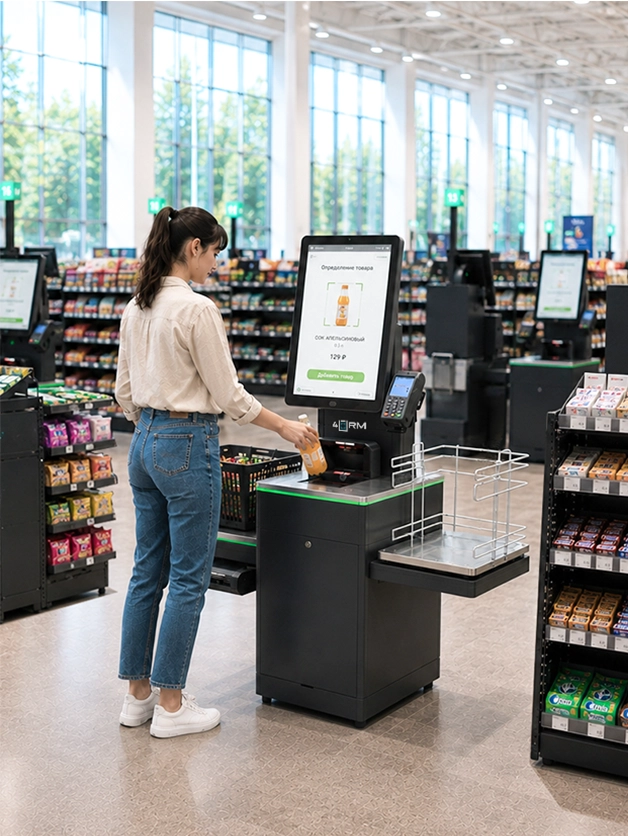
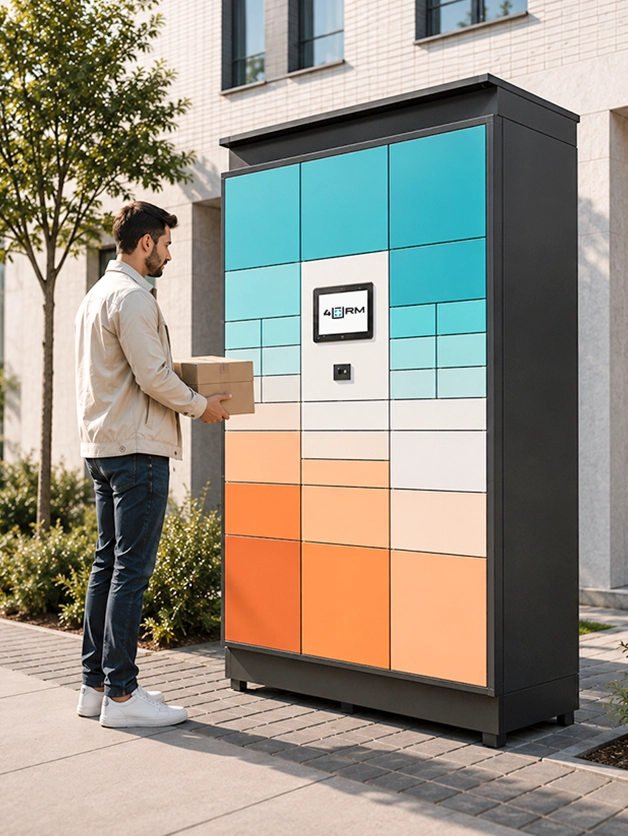
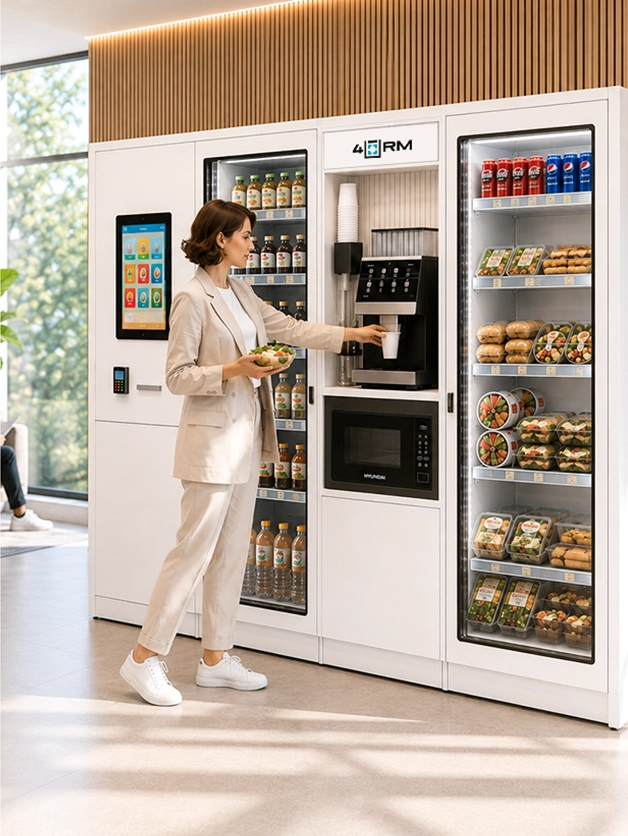
Self-service is no longer just a standalone checkout technology. It is becoming a way to organize retail operations, fulfill orders, and provide everyday services at various points along the customer journey.
The checkout area is just the first step
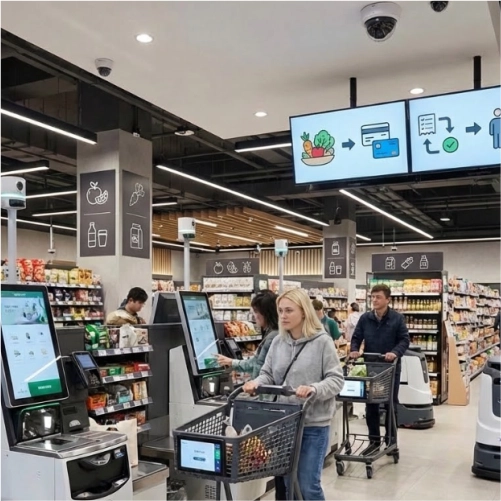
Checkout terminals were the first widespread form of self-service in brick-and-mortar retail, allowing stores to serve multiple customers simultaneously. The checkout area is designed differently for each retail format:
- In a hypermarket, throughput and flow management take center stage.
- In a neighborhood store, compactness and the ability to utilize every square meter of floor space are key. At a location with fluctuating foot traffic, the checkout infrastructure must adapt its operating mode throughout the day rather than remain static.
Therefore, compact and hybrid solutions are being developed alongside classic SSC systems.
In the 4RM lineup, the classic scenario is represented by the Leda self-service checkout system. It can be equipped with one or two weighing platforms, and its modular design allows the orientation and configuration of the equipment to be adapted to a specific area.
For small spaces, there is the Base Self-Checkout—a compact counter that can be used with or without a weighing platform and adapted to monoblocks from various manufacturers.
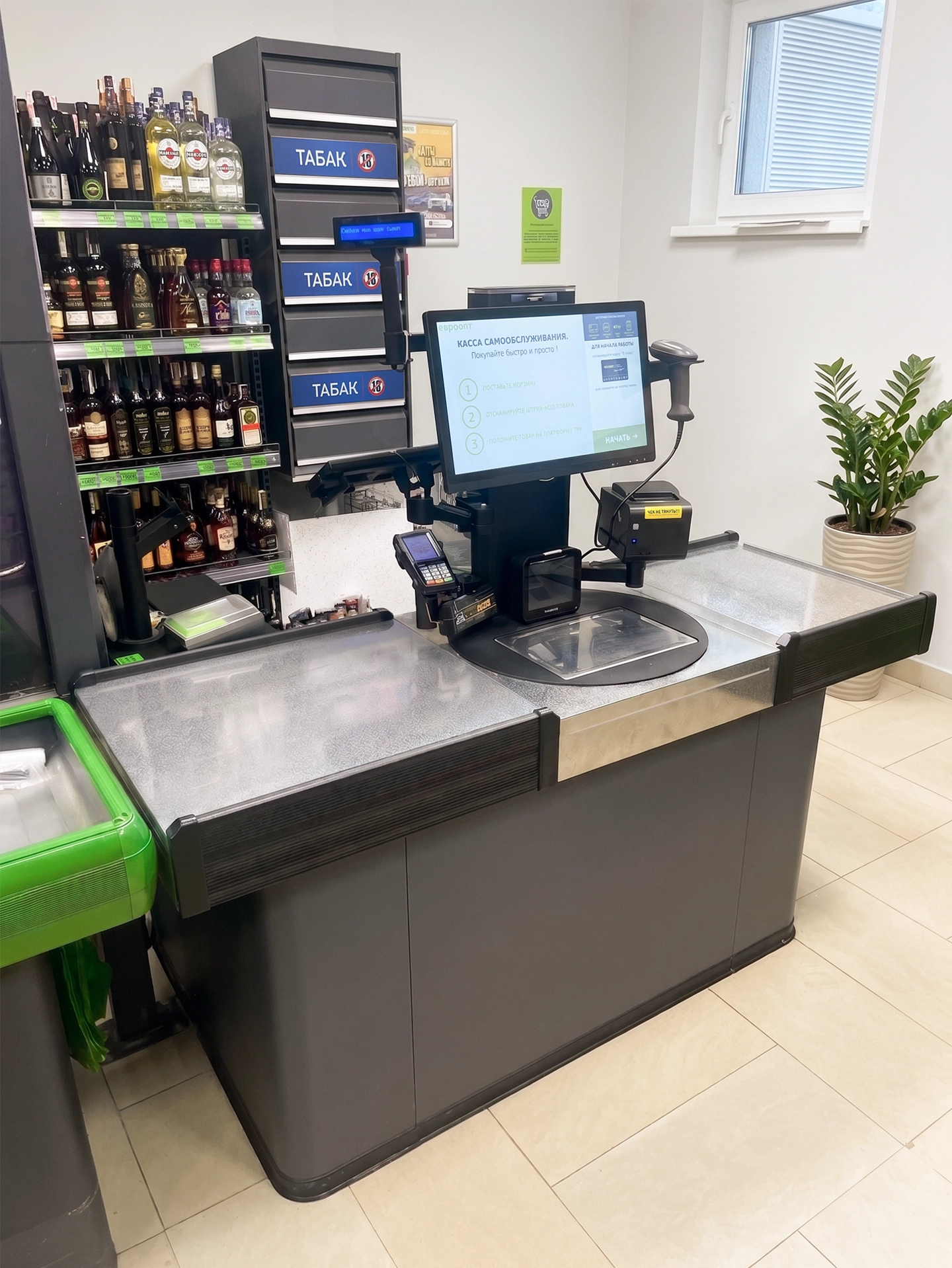
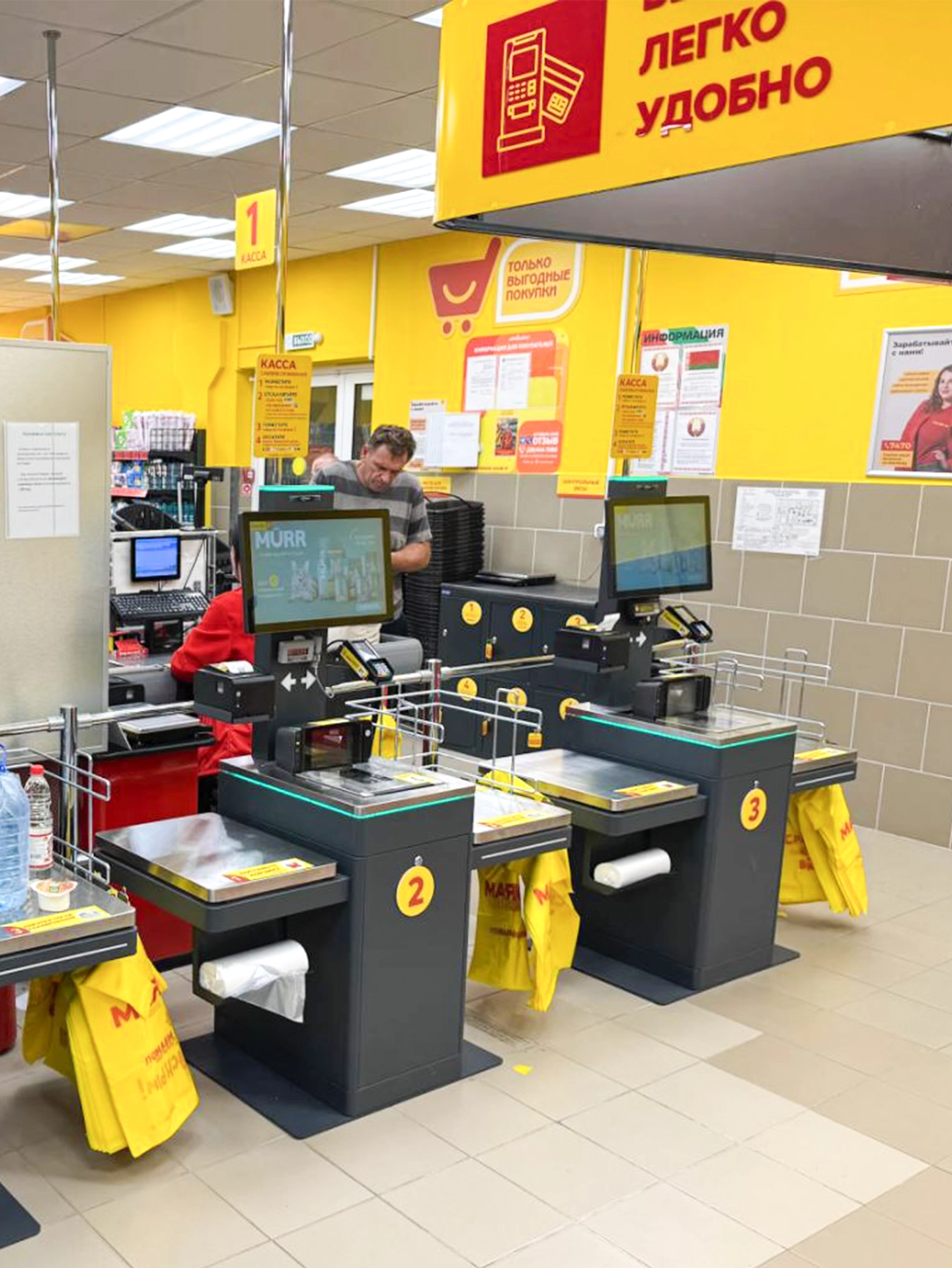
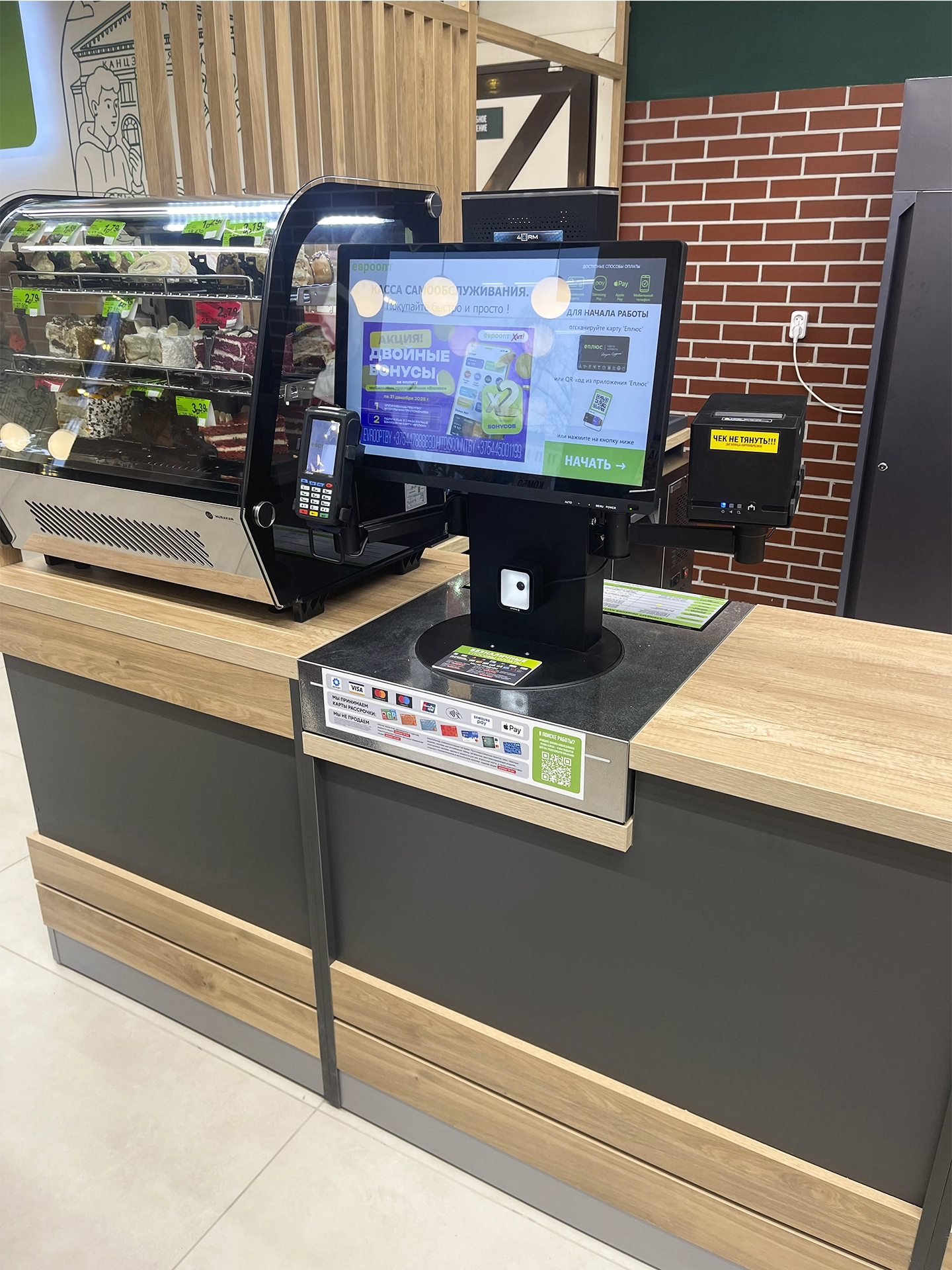
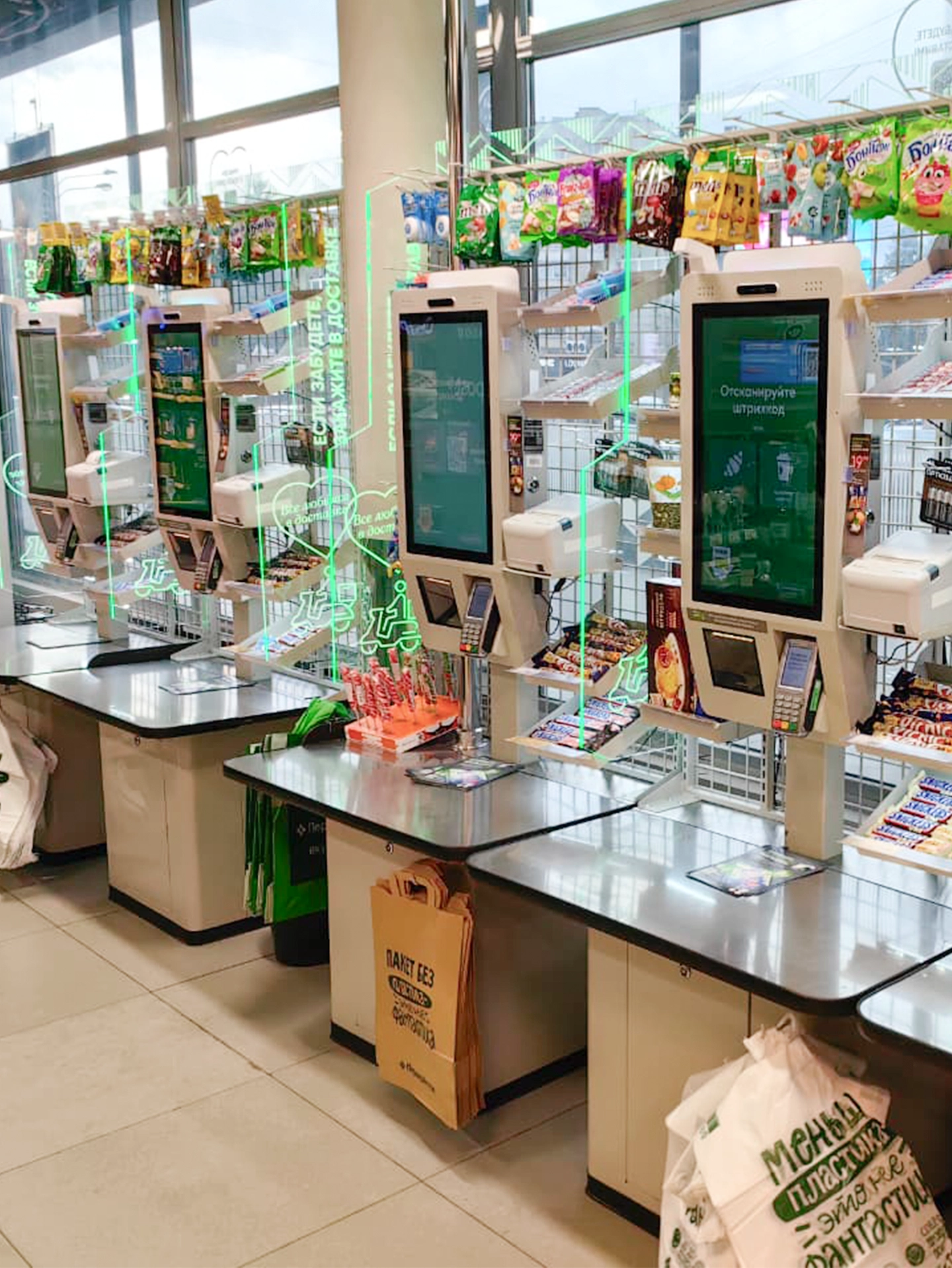
Another goal is not to increase the number of checkout lanes, but to maximize the efficiency of the existing space. The Roto rotary workplace allows a single checkout lane to be used in two modes: with a cashier or in self-service mode. The same mechanism is used in the Nova Roto and Nova Roto+ hybrid systems. In the Nova Roto+ version, a checkweigher platform has been added to the workplace.
The value of such solutions lies not in the transformation of the equipment itself. Retailers gain the ability to adjust the checkout area’s configuration based on workload without installing two separate systems or occupying additional space.
When Artificial Intelligence Is Useful
The mere presence of artificial intelligence does not make equipment more efficient. Its value becomes apparent when it reduces unnecessary actions, errors, or losses.
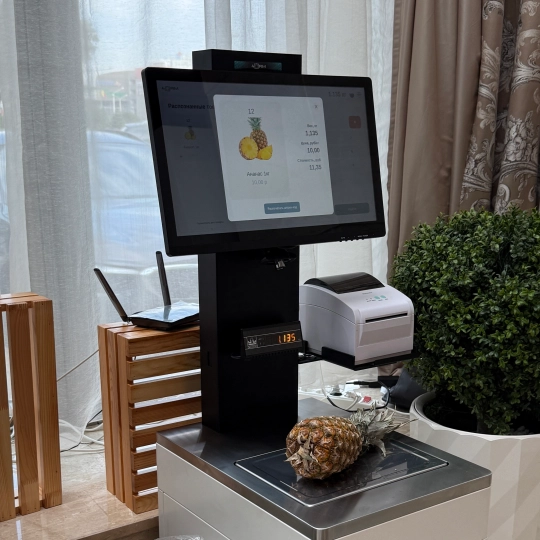
One of the most straightforward scenarios is the recognition of weight-based items. In traditional self-checkout, the shopper places the product on the platform and then searches for the correct item in the catalog. Errors can be accidental: similar items are located nearby, their names differ only slightly, and the user is in a hurry. It’s also possible for a shopper to intentionally select a cheaper item.
When using computer vision, a camera captures the product on the platform, and the system analyzes its visual characteristics and suggests the most likely option. In the 4RM software architecture, this function is performed by Stemma Recognition. For the shopper, this shortens the process of adding the item to the receipt; for the retailer, it provides an additional level of control.
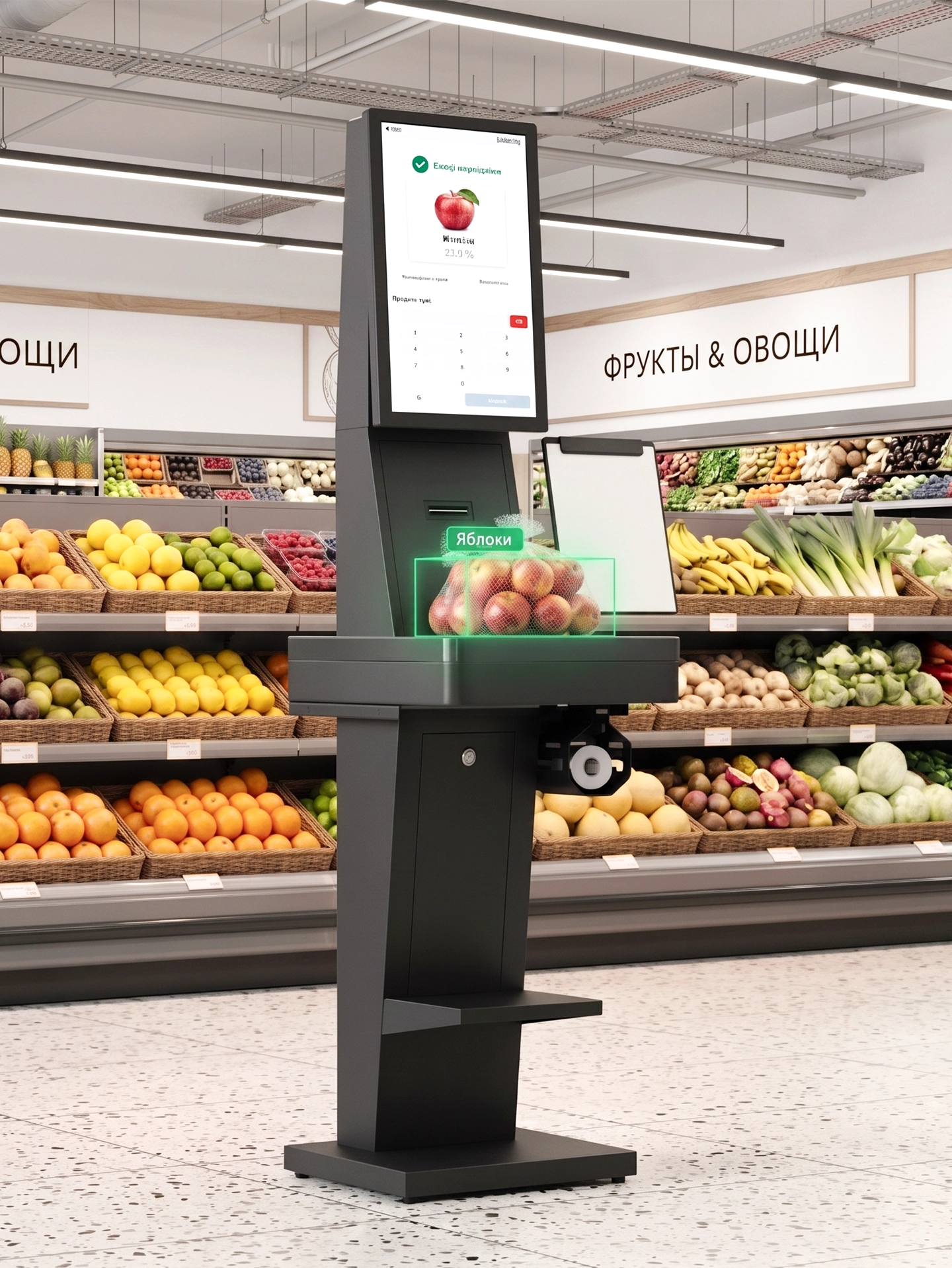
But recognition is only part of the process. Retail chains need to centrally update their product catalogs and prices, monitor the status of scales, view transaction histories, and remotely diagnose equipment. Sova Scale addresses these challenges.
Sova AntiFraud provides an additional level of control. The module compares the selected item, category, weight, and checkout transaction data, flagging atypical actions: replacing an expensive item with a cheap one, repeated cancellations, attempts to bypass recognition, and other discrepancies.
This module should not automatically interpret every anomaly as a violation. Its task is to filter out transactions that require verification and to prevent employees from having to monitor every terminal with the same level of attention.
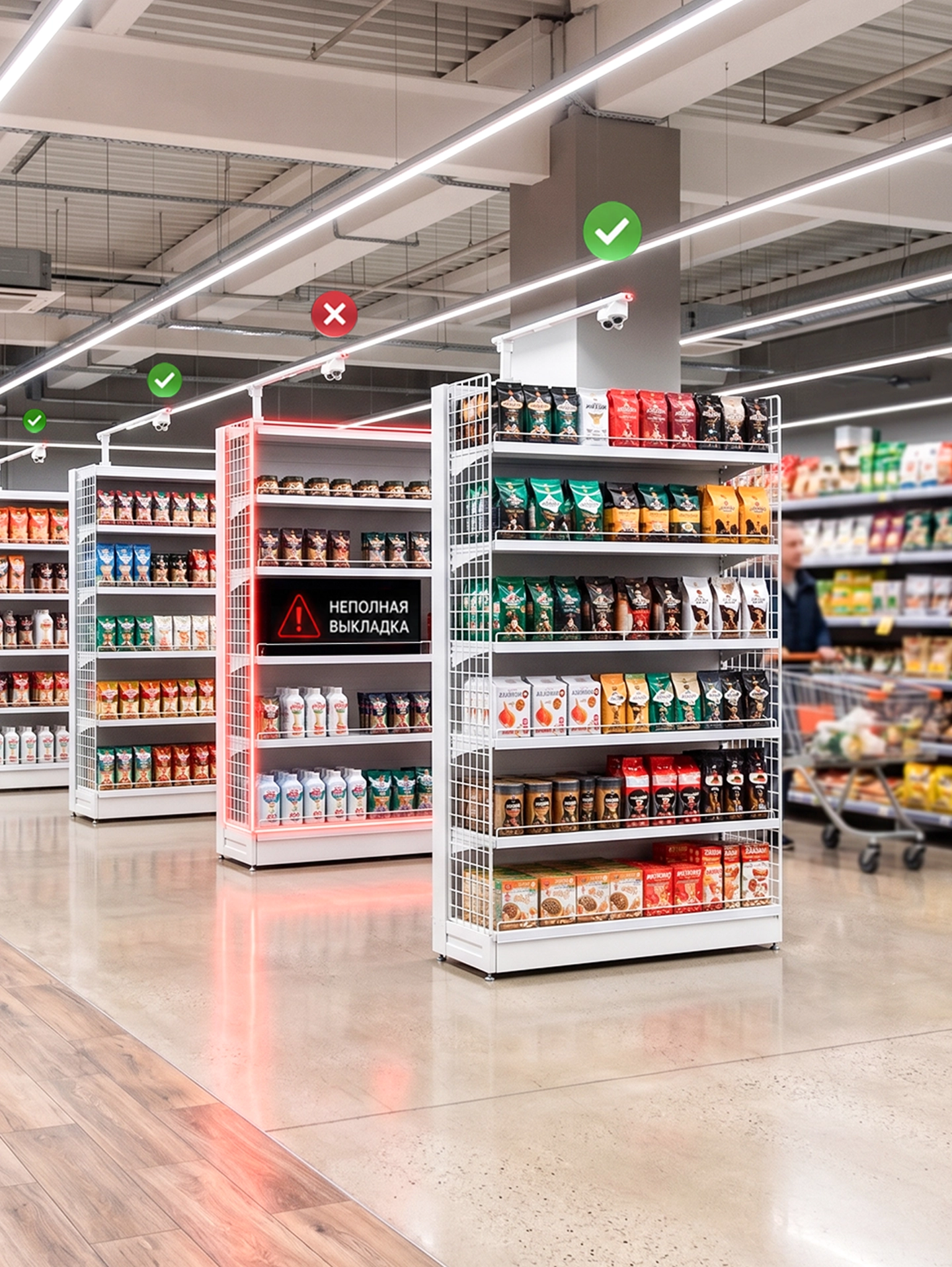
Merchandising control operates on the same principle. Stemma Stock analyzes product availability and compliance with the planogram using images of shelves, refrigerated showcases, and other sales areas. This is especially important for standalone formats: an empty shelf or a display violation cannot be detected only during a staff member’s next visit.
Self-service doesn’t end after payment
A significant portion of purchases is made outside the store. The customer selects items in the app or on the website and comes to the physical location only to pick up the prepared order. In this model, the store serves two functions at once: as a retail space and as a pickup point.
If all orders go through a staff member, the workload shifts from the checkout counter to the information desk or the Click & Collect area. This leads to lines, requires storage space, and pickup times depend on staff availability.
Parcel lockers shift part of the process to the customer. The customer verifies their identity, opens the assigned locker, and picks up the order. Returns can be handled through the same infrastructure. For the retailer, this means fewer manual operations, separated customer flows, and the ability to extend pickup hours.
Metal lockers alone do not solve the last-mile challenge. Parcel lockers must be integrated with the order system, which means they must track shipment status, monitor storage duration, send notifications, log access, and maintain a transaction history.
Within the 4RM ecosystem, this scenario is supported by Locca Pickup Point. The platform integrates with external systems via API, manages orders and returns, monitors locker occupancy, and generates centralized analytics across the network of locations.
It is precisely this software integration that determines whether Parcel lockers will become part of e-commerce or remain standalone dispensers at the entrance.
Parcel lockers in a residential complex are not simply pickup points relocated to the building’s entrance
In a store, a parcel locker serves customers of a specific retailer or users of a particular delivery service. In a residential complex, there are more stakeholders: residents, couriers from various companies, the management company, the developer, and the technical service.
Each participant in the process has their own rights and responsibilities:
- A resident of the residential complex can reserve a compartment in advance and provide the code to the courier.
- The courier should only have access to the specific operation.
- The management company needs an activity log, information on the load, and clear rules for handling unclaimed packages.
- If the system becomes overloaded, it must restrict new reservations or adjust the priorities for locker usage.
Therefore, before installing the equipment, it is necessary to determine not only the number and sizes of the lockers but also the operating procedures: who is authorized to make reservations, which services are granted access to the system, how long a package is stored, what happens after the storage period expires, who is responsible for maintenance, and what data is available to the management company.
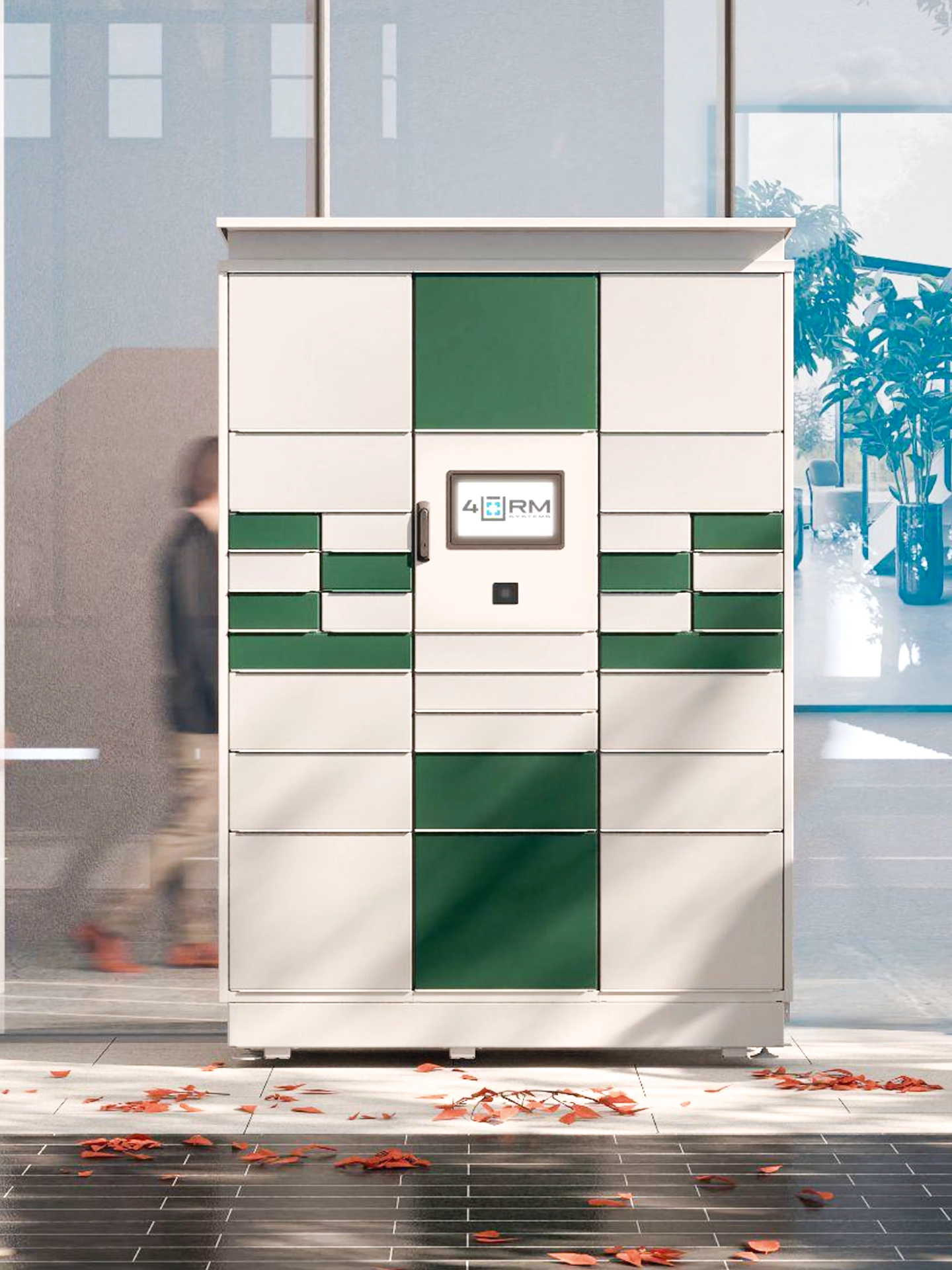
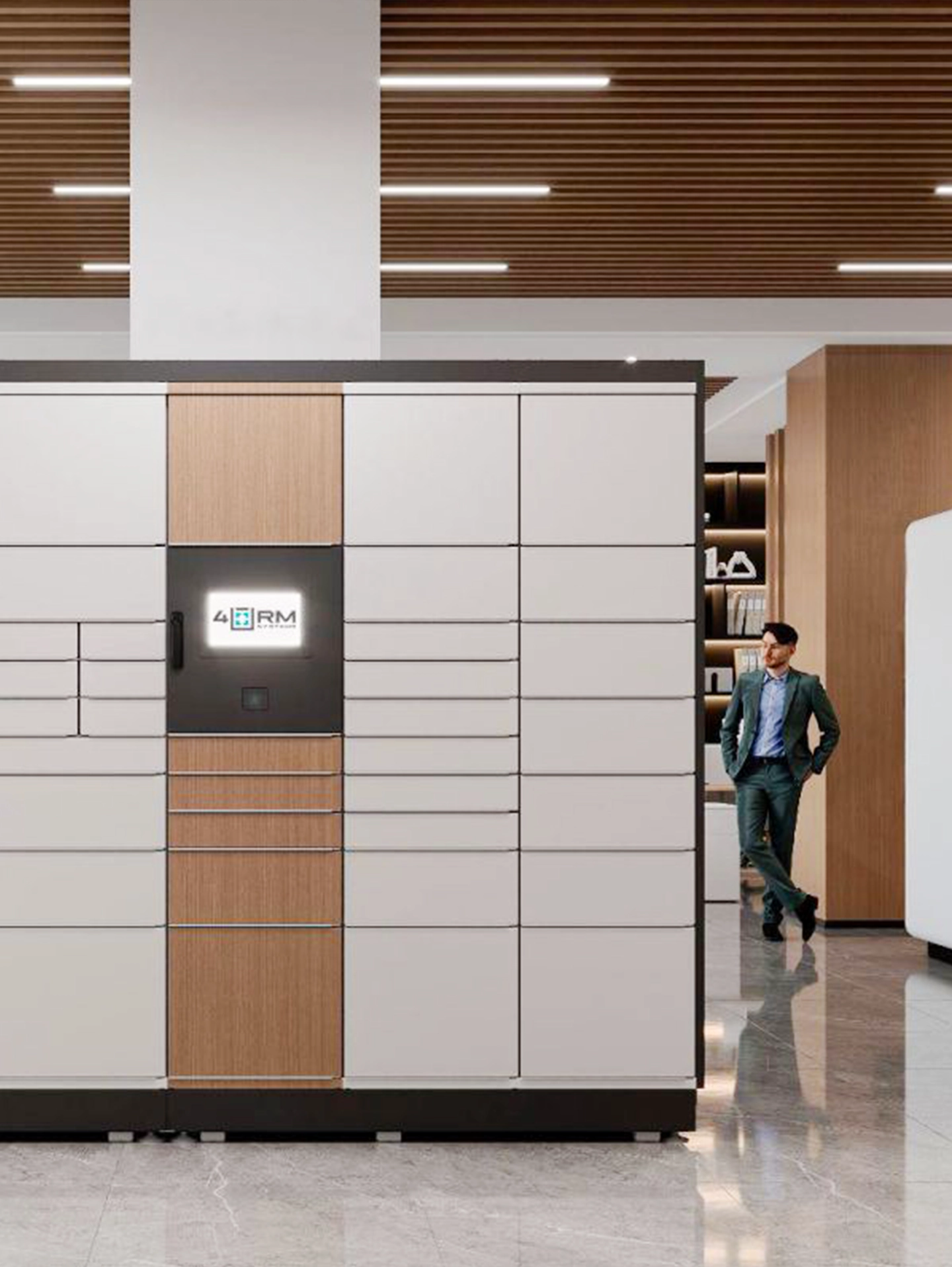
In the 4RM architecture, Locca Home is designed for this scenario. The module supports locker reservations, access control, integration with courier services, notifications, load monitoring, and usage analytics.
For residents of the residential complex, the practical benefit is clear: they can pick up their orders near their home without having to coordinate a time with the courier. The management company benefits from a more organized delivery flow, and the number of outsiders moving through the building’s entrances and floors is reduced. For the developer, this is an additional service that can be integrated into the residential complex’s app and linked to the access control system.
From a Pickup Point to a Service Hub
The location where parcel lockers are installed often has greater potential than just a single pickup function. A constant flow of residents, employees, or visitors passes through it. They also have other regular needs: buying water or ready-to-eat meals, having a cup of coffee, paying for a service, picking up an order, or returning merchandise.
This gives rise to a service hub, where vending, coffee, refrigeration, and payment modules are placed next to the pickup lockers. It’s important that this not be a mechanical collection of devices.
The composition of the location should be determined by the location’s specific use case:
- In a residential complex, a combination of Parcel lockers and the sale of essential goods may be in demand.
- In an office—ready-to-eat meals and coffee.
- At a business—a micromarket with an expanded product range.
- In a remote urban area—a compact service point that partially compensates for the lack of a full-fledged retail infrastructure.
In 4RM, the Locca Hub is provided for connecting additional services. The platform allows you to manage payments, equipment setup, advertising content, partner integrations, and the performance of each location.
The commercial value of this approach lies not in the maximum number of modules, but in a single location’s ability to solve several common user tasks and generate additional transaction volume without the constant presence of staff.
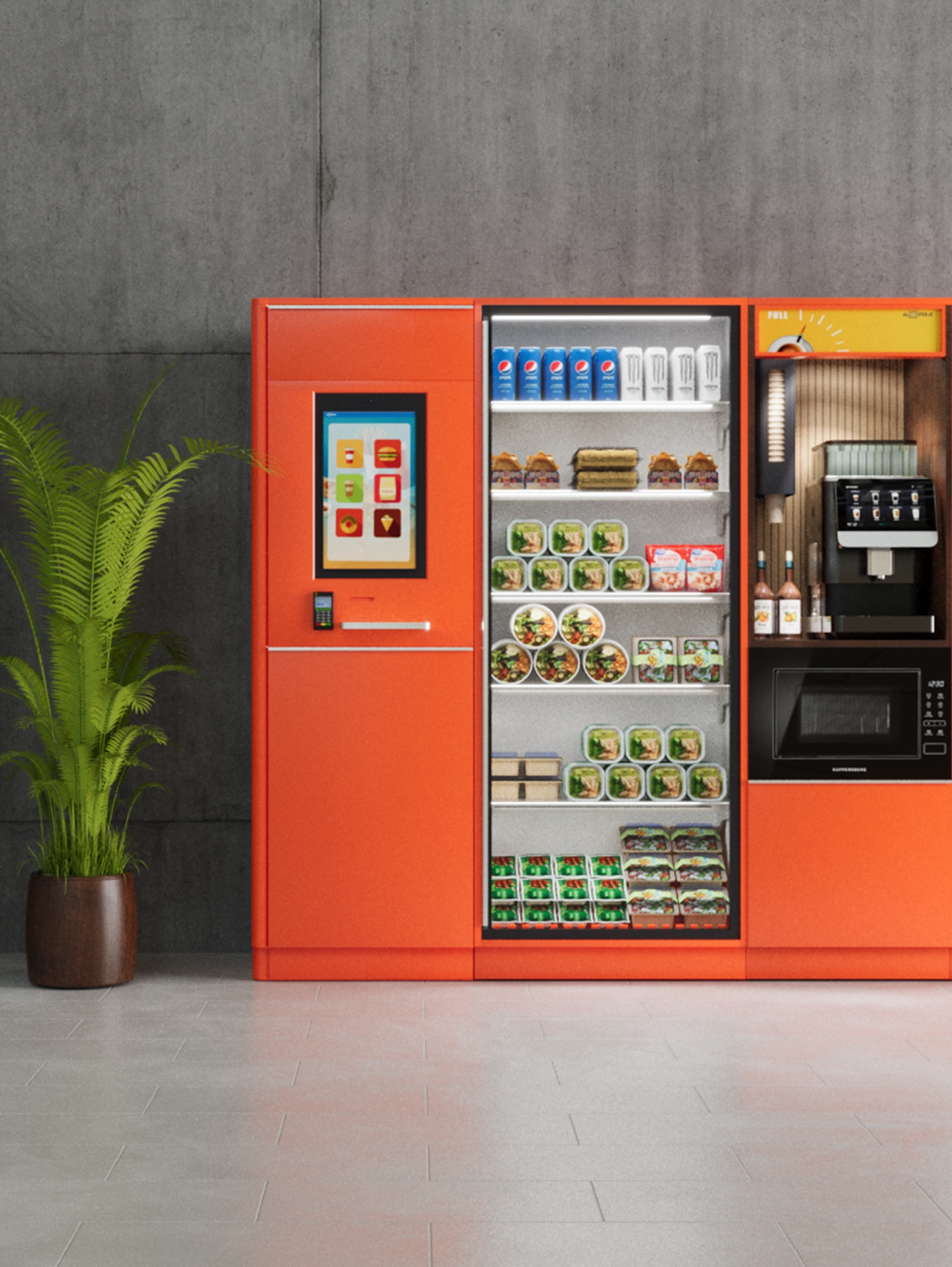
A micromarket is not a scaled-down store, but a distinct business model
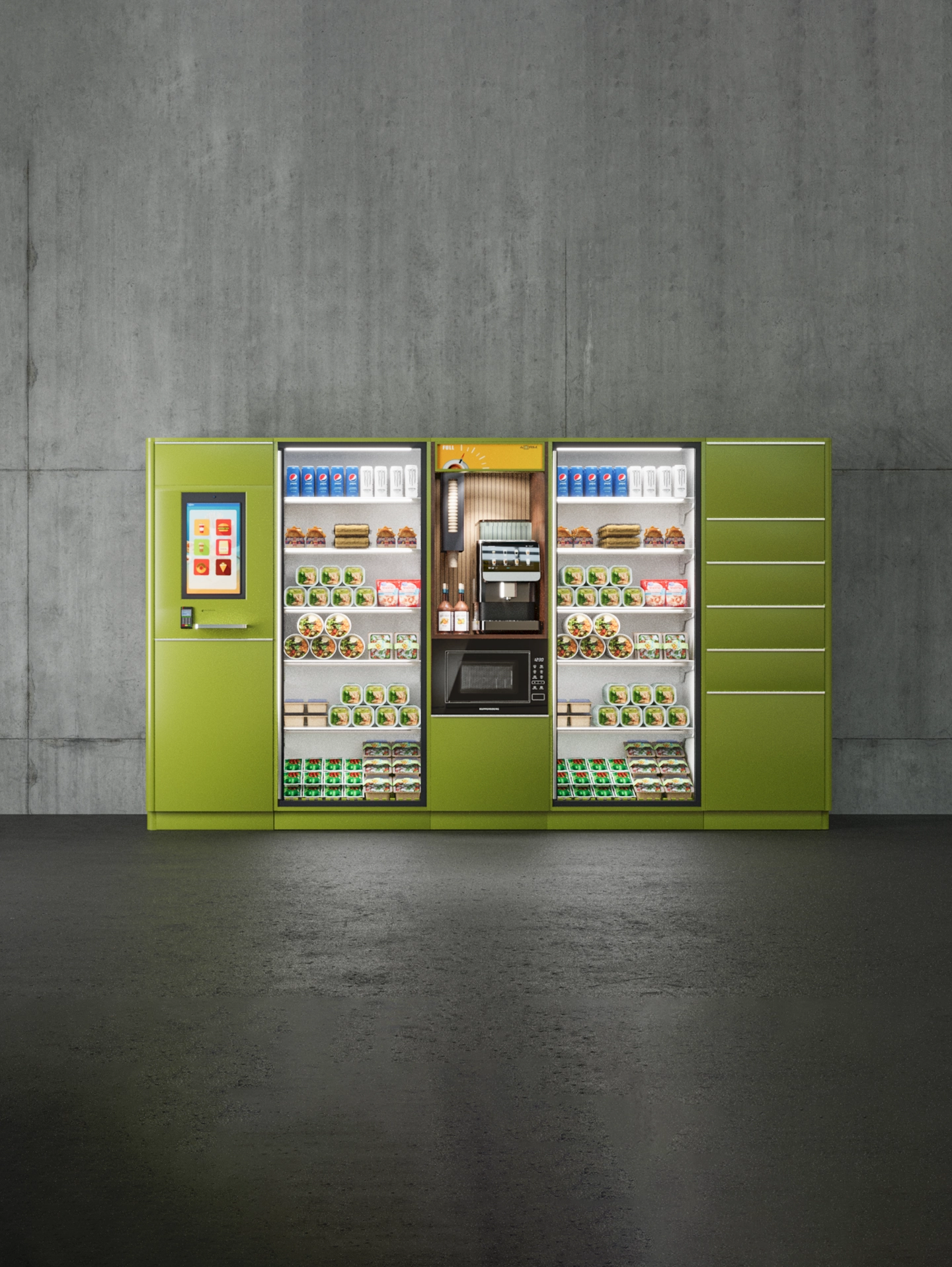
A micromarket is sometimes perceived as a small self-service refrigerated dispenser. In practice, it is a more complex system. A typical store involves a sales floor, a checkout, staff, and constant supervision. In a micromarket, some of these functions are handled by the equipment and software.
The 4RM configuration can combine refrigerated modules for prepared food and beverages, a coffee station, a payment terminal, access control, Parcel lockers, and a unified remote management system. 4RM Systems provides the retail equipment and enclosure; the refrigeration system can be implemented in collaboration with 4RM Refrigeration; and software control is handled by 4RM Tech.
The shopping experience should remain simple: authorization, opening the module, selecting a product, paying for it, and receiving it.
But for the operator, behind this simplicity lies constant management of inventory levels, expiration dates, restocking frequency, technical condition, and demand patterns. Therefore, in addition to refrigeration and retail equipment, the software layer is also crucial for a micromarket:
- Inventory control and planograms help plan restocking.
- Sales analytics reveal differences in demand between residential complexes, business centers, and industrial facilities.
- Remote monitoring allows you to detect a problem before the location comes to a complete standstill.
A micromarket makes sense where there is a steady flow of customers, but opening a full-scale store is not economically or logistically feasible: in an office, at a factory, in a hospital, at a university, in a small residential neighborhood, or in a remote area.
However, autonomy does not mean a lack of operational work. The format requires restocking, expiration date monitoring, technical maintenance, and regular adjustments to the product assortment. The technology cannot correct a poorly chosen location or product mix.
Why Equipment Without a Software Framework Turns Into a Disjointed “Fleet”
As long as a store operates with just a few standalone devices, they can be managed individually. But as the network expands, this model stops working. One system handles the checkout counters, another the scales, and a third online orders. Product lists and prices are updated through different interfaces, malfunctions are detected with a delay, and transaction history remains fragmented.
As a result, the retailer ends up with a “fleet” of equipment but lacks a holistic view: which devices are busy, where errors occur, what requires staff intervention, and how individual solutions affect the store’s operations.
Modern self-service infrastructure is built on two levels:
- The physical level performs the operation: weighing, payment, storage, or dispensing.
- The software level connects the equipment to inventory management, payment systems, logistics, access control, and analytics.
This does not mean that a chain must implement the entire suite of technologies at once. The practical benefit of a unified system lies elsewhere: you can start with a single task—for example, an SSC zone, scales, or Parcel lockers—and then integrate new elements without creating yet another isolated system.
Within 4RM, the physical equipment is manufactured by 4RM Systems, refrigeration solutions are developed by 4RM Refrigeration, and 4RM Tech provides the software layer. As a result, the checkout station, scales, Parcel lockers, and micromarket operate according to common principles, are configured centrally, transmit data, record transactions, and support remote monitoring.
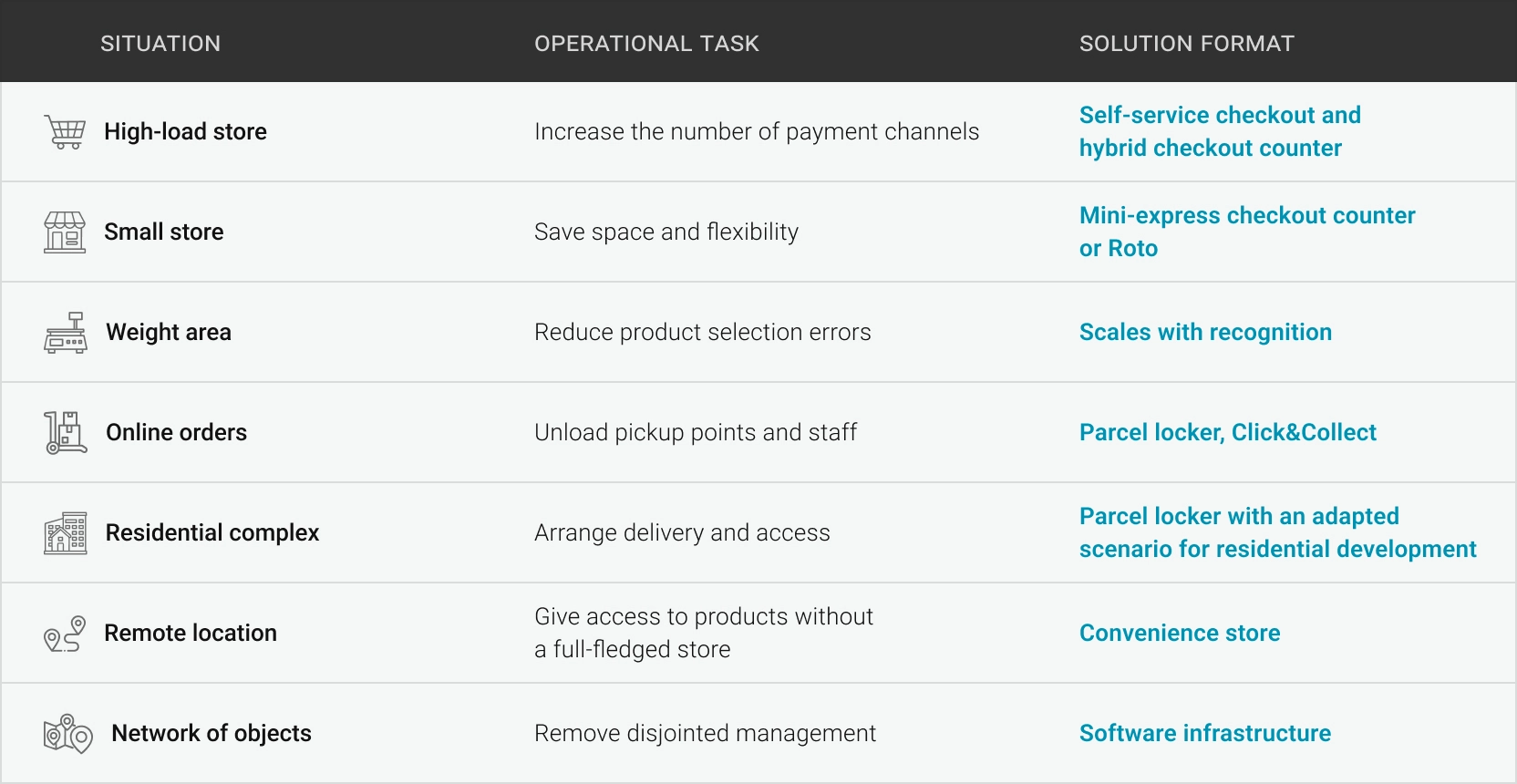
For a retailer, this architecture makes it possible to match a specific operational task with the appropriate solution format.
What a retailer needs to consider before a pilot
The first question should not be the name of the equipment, but rather the operation the business wants to change. Before selecting a vendor and configuration, it’s helpful to go through a few points.
- 1. Use Case. What exactly will the customer do on their own: pay, weigh items, pick up an order, return merchandise, or purchase prepared food?
- 2. Traffic Volume and Location. What is the foot traffic at the location, how does the volume vary throughout the day, and is there enough space for the equipment and maintenance?
- 3. Integration. How will the solution interact with the ERP, checkout system, CRM, mobile app, order management system, and payment services?
- 4. Operating Costs. In addition to the cost of the equipment, you need to factor in integration, connectivity, service, restocking, downtime, consumables, and the labor of the staff who maintain the system.
- 5. Failure Recovery. What happens in the event of a loss of connectivity, power outage, or failure of a camera or individual cell? Which operations will remain available, and how is data restored?
- 6. Scalability. After the pilot phase, is it possible to connect new points and modules without completely replacing the software and hardware infrastructure?
- 7. Responsibility for Results. Who is responsible for the equipment, software, integration, and support throughout the project’s entire lifecycle?
One Infrastructure—Multiple Points of Contact
The self-service area no longer has to be located in a single room. Scales can be installed in the produce section, an SSC in the checkout area, Parcel lockers at the entrance or on the building’s facade, a residential module in the building’s entrance hall, and a mini-market in an office or at a business.
For the customer, these are different services. For the retailer or operator, they must all operate according to common rules: receive up-to-date data, record transactions, report malfunctions, and transmit information to connected systems.
Retailers still need high-quality checkout machines, scales, refrigerators, and Parcel lockers. But the success of a project is no longer determined by the quality of a single device. A checkout machine may be user-friendly but fail to transmit the necessary data. A Parcel locker may have suitable compartments but not support returns. A micro-market may look modern but prove difficult to restock and monitor.
That’s why self-service is increasingly being designed as a unified operational model, in which hardware, software, and processes are developed together. You can start with a single task—the checkout area, scales, order pickup, or a standalone point of sale. The key is to ensure the solution does not become a technological dead end and can evolve alongside the chain while accounting for changes in customer behavior.
This very principle is the base of 4RM’s product development. The division combines in-house manufacturing of retail and refrigeration equipment with the engineering expertise and digital capabilities of 4RM Tech.
As a result, checkout machines, scales, Parcel lockers, refrigeration units, and vending modules are designed not as disparate devices, but as elements of a common infrastructure that can be adapted to a specific format, refined to meet the chain’s requirements, and scaled incrementally. This approach allows retailers to evolve their solutions alongside their business, changing retail formats, and shifting consumer behavior, without becoming dependent on a set of incompatible technologies.








Need some advice?
Send a request and we will call you back.
